

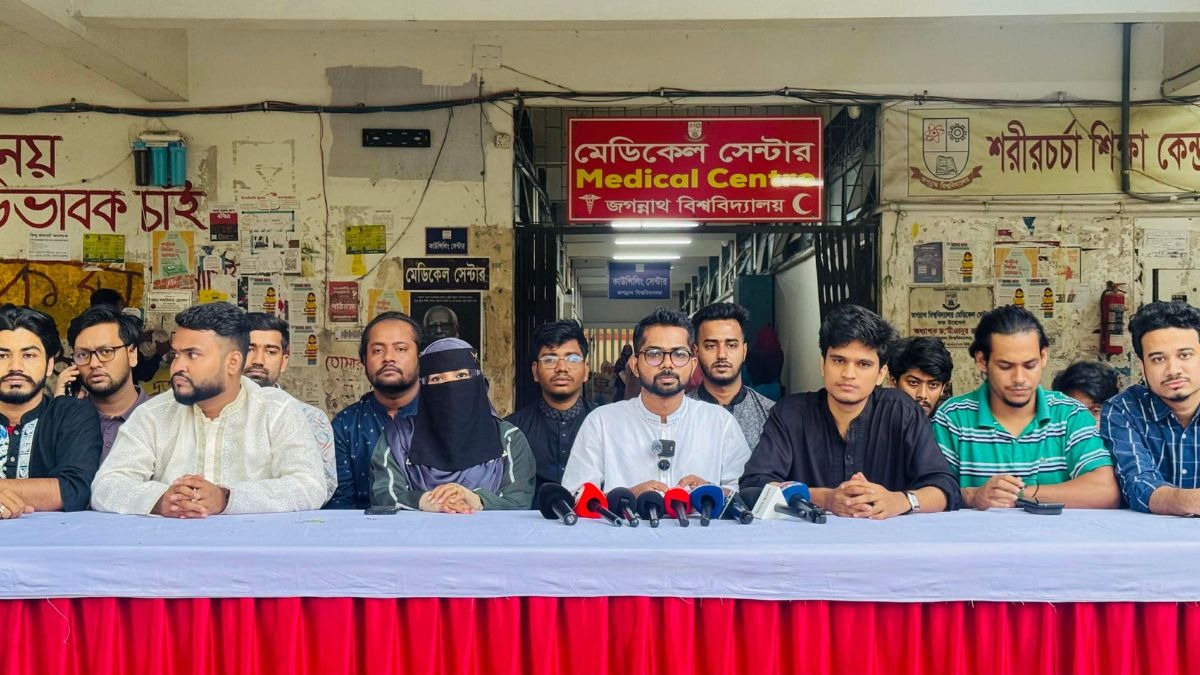
Two rival student coalitions at Jagannath University on Thursday delivered an unmistakable ultimatum to the campus election commission: hold the central students’ union JnUCSU election on the scheduled date, 22 December, or face organised resistance. In separate emergency briefings, the Chhatra Shibir–backed “Adommo Jobian Oikko” and the Chhatra Dal–backed “Oikyoboddho Nirbhik Jobian” panels accused the election commission of partiality and warned that any administrative manoeuvre to postpone the vote would be unacceptable.
Speakers from both camps pointed to recent events they say undermine the commission’s neutrality, most notably a 23 November campus concert where several candidates from one side allegedly mounted the stage despite a standing ban and publicly announced grants, an act the complainants called a clear breach of the election code. “After such blatant violations, the commission’s decision to issue show-cause notices to only two people and give them 15 days to reply looks like deliberate laxity,” said Riazul Islam, the vice-presidential candidate for the Adommo Jobian Oikko panel.
At the afternoon press conference, Oikyoboddho Nirbhik Jobian’s VP hopeful Rakib echoed the demand for an on-time poll and framed the dispute as a defence of democratic rights on campus: “Jagannath has always stood for harmony. We want the election on 22 December so every student can freely express their choice,” he told reporters before handing a memorandum to the commission. Alongside the two major slates, smaller groups, including a left-leaning “Maulana Bhasani Brigade” slate and independents also signed on to the demand for no delay.
The chief election commissioner, Prof. Dr. Mostafa Hasan, responded cautiously, saying the recent earthquake had forced a temporary suspension of university activities and compelled the commission to postpone logistical tasks such as doping tests. He told reporters the commission would convene meetings with candidates before making any final call on the timetable, indicating that consultation — not unilateral postponement — would determine the path forward.
The standoff exposes two tensions at the heart of student politics this season: strict enforcement of campaigning rules around public events, and the fragility of trust between contesting teams and the administering body. Both panels warned that any perceived administrative interference or selective application of the code would not only delegitimise the contest but could also provoke mass mobilisation on campus in defence of electoral fairness.
With the clock ticking toward 22 December, university authorities face a narrow window to defuse the crisis: they must produce a transparent, enforceable calendar, demonstrate impartial handling of code breaches from the 23 November concert, and set clear contingency protocols for earthquake-affected logistics such as doping tests. Failure to do so risks turning what should be a routine student election into a protracted campus confrontation.
Leave a Reply